
 | Prof. Han DingCAS Academician, IEEE Fellow Huazhong University of Science and Technology, ChinaHan Ding, Professor, Doctoral Supervisor, Academician of the Chinese Academy of Sciences (CAS). He currently serves as Director of the Academic Committee of Huazhong University of Science and Technology (HUST), Director of the National Innovation Center for Digital Design and Manufacturing, Director of the State Key Laboratory of Intelligent Manufacturing Equipment and Technology, Chair of the Steering Expert Group for the Major Research Program of the National Natural Science Foundation of China (NSFC) on "Basic Theories and Key Technologies for Collaborative Robots", and Chief Scientist of the NSFC Basic Science Center for "Roboticized Intelligent Manufacturing". He has long been engaged in research on the theories and technologies of robotics and digital manufacturing. He holds the following academic positions: Chairman of the Robotics Branch of the Chinese Mechanical Engineering Society (CMES), Associate Editor-in-Chief of Science China: Technological Sciences, Member of the Editorial Board of National Science Review, Member of the Editorial Board of Chinese Science Bulletin, Technical Editor of IEEE/ASME Transactions on Mechatronics, and Senior Editor of IEEE Transactions on Robotics and Automation. He has published 4 academic monographs and more than 260 SCI-indexed journal papers. His honors include 1 Second Prize of the State Natural Science Award, 2 First Prizes of the State Teaching Achievement Award, 2 Second Prizes and 1 Third Prize of the State Scientific and Technological Progress Award, and 1 Grand Prize of the Technological Invention Award under the China Machinery Industry Science and Technology Award. |
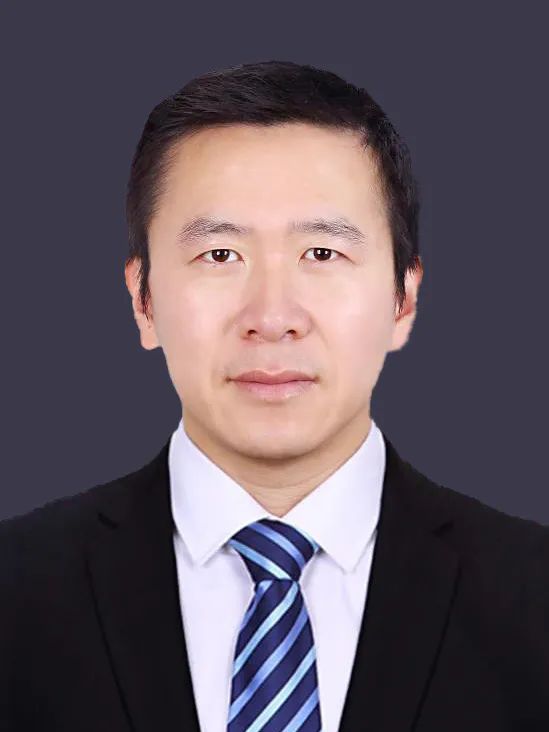 | Prof. Hui ZhangThe Yangtze River Scholar, IEEE Fellow Beihang University, ChinaHui Zhang, Professor, Doctoral Supervisor, National High-Level Young Talent. He has long been committed to scientific research related to special vehicle design, vehicle dynamics control, and intelligent driving. He has presided over numerous projects, including the International Cooperation Project of the National Key R&D Program of China and the Joint Key Program of the NSFC. He has published more than 150 SCI-indexed journal papers (including over 80 papers in IEEE journals, and won the IEEE Journal Annual Best Paper Award twice), been granted more than 60 invention patents, and published 2 monographs. As the lead recipient, he won the First Prize of the Scientific and Technological Progress Award of the China Society of Automotive Engineers (CSAE) and the First Prize of the Scientific and Technological Progress Award of the China Communications and Transportation Association (CCTA). As a core participant, he received the First Prize of the Natural Science Award of Jilin Province, the First Prize of the Technological Invention Award of the China Machinery Industry Federation, and the Second Prize of the Teaching Achievement Award of Beijing Municipality. He has been honored with the IEEE IES Early Career Award, the SAE International Ralph R. Teetor Educational Award, and the CSAE Outstanding Young Talent Award, among others. He currently serves as Vice Chair of the Technical Committee on Industrial Cyber-Physical Systems of the IEEE Industrial Electronics Society (IES), Co-Chair of the Intelligent and Connected Vehicles Technical Committee of SAE International, and Associate Editor/Editorial Board Member for prestigious journals including IEEE Transactions on Intelligent Vehicles (TIV), IEEE Transactions on Industrial Electronics (TIE), and Mechanical Systems and Signal Processing (MSSP). |
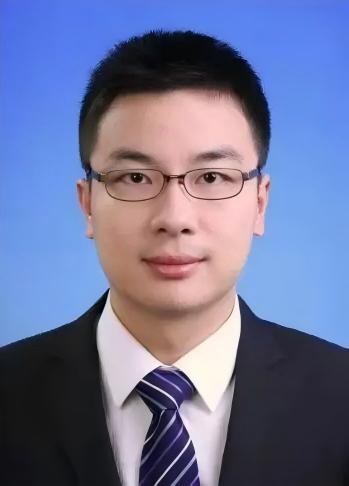 | Prof. Yuan YuanThe National Youth Talent Northwestern Polytechnical University, ChinaYuan Yuan, Tenured Professor at the School of Astronautics, Northwestern Polytechnical University (NPU), Doctoral Supervisor, Recipient of the NSFC Excellent Young Scientists Fund. His main research focuses on the interdisciplinary field of game confrontation theory and artificial intelligence, with a core emphasis on the safe and autonomous control of unmanned systems under multi-source interference and adversarial environments. He has presided over the NSFC Excellent Young Scientists Fund Project and a national key R&D program with a funding scale of over 10 million RMB. He has published more than 40 SCI-indexed papers and 3 monographs in Chinese and English. He has won the First Prize of the Natural Science Award of the Chinese Association of Automation (CAA), the Second Prize of the Natural Science Award of Shaanxi Province, and the Wu Wenjun Outstanding Young Scientist Award in Artificial Intelligence. He was selected for the Soaring Overseas Scholar Program of NPU. He once served as Guest Editor for theInternational Journal of Systems Science, and currently holds positions as Editorial Board Member for journals including IEEE Transactions on Cybernetics, and Deputy Director of the Youth Working Committee of the Chinese Institute of Command and Control (CICC). |
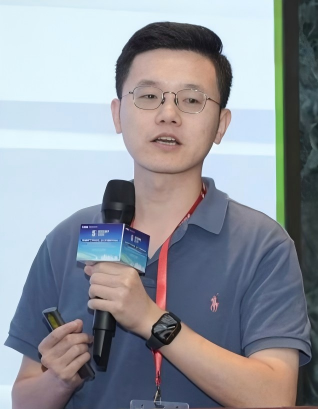 | Prof. Changxin LiuThe National Youth Talent East China University of Science and Technology, ChinaChangxin Liu, PhD, Professor, Doctoral Supervisor. He is a selectee of the National High-Level Young Talent Program and the High-Level Talent Program of Shanghai Municipality. He received his PhD in Mechanical Engineering from the University of Victoria, Canada in 2021, and completed postdoctoral research at the KTH Royal Institute of Technology, Sweden. His main research interests include distributed optimization and machine learning, model predictive control, and industrial process modeling and optimization. He has published more than 40 academic papers, including 13 papers in IEEE Transactions on Automatic Control (TAC) andAutomatica, the top journals in the field of control science and engineering. He serves as Associate Editor of the international journalCircuits, Systems, and Signal Processing, Editorial Board Member of the IEEE International Conference on Control and Automation, Member of the Technical Committee on Security and Privacy of the IEEE Control Systems Society (CSS), and Member of the Youth Working Committee of the Shanghai Automation Society. He was awarded the 2022 First Prize of the Natural Science Award of the CAA. |
 | Prof. Lei ZuoIEEE Member Chang'an University, ChinaLei Zuo, Professor, Doctoral Supervisor. He was awarded the title of "Backbone Teacher" of Chang'an University in 2020. In recent years, he has been dedicated to research in the fields of multi-agent cooperative control, vehicle-road cooperative control, and traffic information control. He has successively presided over numerous scientific research projects, including the special project of the National Key R&D Program of China, NSFC projects, the Key R&D Program of Shaanxi Province, the Natural Science Foundation of Shaanxi Province, and the China Postdoctoral Science Foundation project. He has also participated in multiple national key scientific research projects as a core member. To date, as the first author, he has published more than 20 academic papers in top journals in the fields of control, transportation and information science, including IEEE Transactions on Intelligent Transportation Systems (ITS), IEEE Transactions on Cybernetics, andInformation Sciences, with a cumulative impact factor of over 30 and a total citation count of 287. He serves as a member of the Trusted Control Committee and the Construction Robot Committee of the CAA, and also acts as a peer reviewer for journals including Automatica and IEEE Transactions on Intelligent Transportation Systems (ITS). |